Pinterest is not a social network. It's a search engine for things people want to buy.
When someone pins a burgundy trench coat or saves a minimalist winter lookbook, they're not scrolling for entertainment — they're building a shopping list. Pinterest's own data shows that 97% of searches on the platform are non-branded, meaning shoppers arrive open-minded and ready to discover new brands. The intent is there. The question is whether your photography is good enough to capture it.
Most fashion brands underinvest in Pinterest content for one reason: they don't have enough high-quality images. Running an effective Pinterest presence requires a constant stream of polished, vertical, editorial-style photography — across seasons, categories, and styles. Traditional photoshoots produce too few images too slowly and cost too much to repeat regularly. That's where AI-generated lookbook content changes everything.
Why Pinterest Is Fashion's Highest-Intent Discovery Channel
Before diving into what makes photography perform on Pinterest, it's worth understanding why the platform deserves more attention than most fashion brands give it.
The audience is planning, not scrolling. Pinterest users save ideas for future purchases. The average time between first save and purchase on Pinterest is significantly longer than on Instagram or TikTok — which means pins you create today continue driving traffic and sales months down the line. This compounding effect is unlike almost any other platform.
Search intent is massive. Terms like "fall outfit ideas," "minimalist fashion aesthetic," and "capsule wardrobe essentials" generate millions of searches every month on Pinterest. Fashion is consistently one of the platform's top-performing categories. Unlike Instagram, where discovery is algorithm-dependent, Pinterest lets your content rank in search results indefinitely.
Demographics are buyer-ready. Pinterest skews toward women with above-average household incomes who are actively involved in purchasing decisions. For most fashion brands, this overlaps directly with core customer segments.
Product tags drive direct purchase. Pinterest's shopping integrations — product pins, shoppable collections, and catalog sync with Shopify — let you turn a saved image directly into a transaction. A great pin doesn't just drive saves; with proper setup, it drives checkout.
The combination of high intent, search longevity, and purchase integration makes Pinterest the platform where great fashion photography delivers ROI for years, not hours.
What Makes Fashion Photography Perform on Pinterest
Pinterest's content format preferences are specific, and they differ meaningfully from what works on Instagram or TikTok. Understanding these nuances is the difference between pins that save and pins that convert.
Vertical Is Non-Negotiable
Pinterest is designed for tall images. The ideal aspect ratio is 2:3 (1000×1500 px or 1200×1800 px). Square images underperform. Horizontal images are nearly invisible in the feed. If your photoshoot produces landscape or square crops, you're already at a disadvantage before anyone sees the garment.
AI-generated lookbook images are easy to produce in 2:3 format from the start — no post-crop needed.
Editorial Aesthetic Over Catalog Clean
Pinterest's algorithm and its users prefer imagery that tells a story over plain white-background catalog shots. What performs:
- Styled scenes: model in a contextual setting (café, cobblestone street, apartment interior)
- Mood-driven lighting: soft, natural, or dramatically directional — not flat studio fill
- Cohesive color palette: pins that fit into a visual theme tend to get saved into curated boards
- Aspirational but attainable: the styling shows how real people would actually wear the pieces
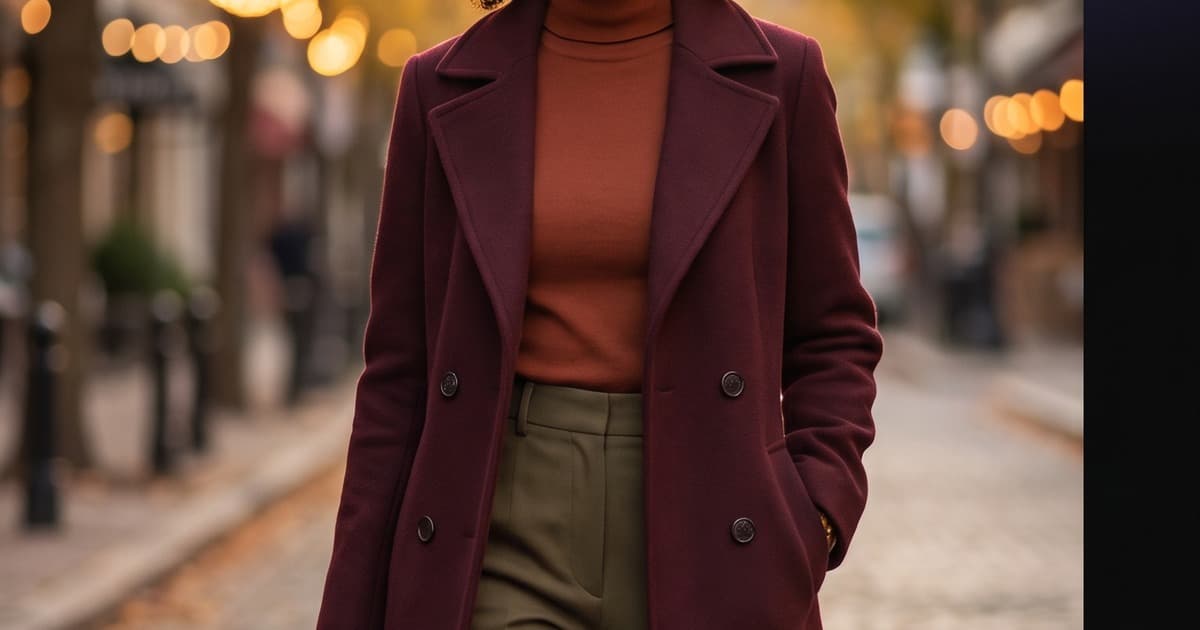
This is where AI lookbook photography has a structural advantage. Instead of generating sterile product shots, it produces full editorial-quality scenes: a linen blazer over a sun-lit balcony, a wool coat on a rain-wet Paris street, a relaxed denim set in a kitchen with morning light. These are the images that get saved into "Fall Wardrobe" and "Outfit Inspiration" boards.
Consistent Brand Identity Across Boards
Pinterest's structure — boards and collections — rewards brands that maintain a consistent visual language. When someone visits your Pinterest profile and sees 200 images with clashing lighting, inconsistent color grading, and mismatched backgrounds, they don't follow. When they see a cohesive aesthetic across every season and category, they do.
This is one of the hardest things to achieve with traditional photography (different photographers, different days, different conditions) and one of the easiest things to achieve with AI-generated content (consistent model, lighting, background, and color treatment across every single image).
Volume Is a Competitive Advantage
The Pinterest algorithm rewards accounts that pin consistently. Brands that post 10-25 pins per week outperform those that post 5. But more importantly, each pin is an independent search-discoverable asset. A brand with 1,000 optimized pins covering every keyword variation in its category has exponentially more surface area than a brand with 200.
Traditional production creates scarcity. A two-day shoot produces 30-80 final selects. AI production creates abundance: 200 images from one upload session, covering every SKU in multiple contexts.
How AI Lookbook Imagery Maps to Pinterest's Best Formats
The formats that drive engagement and conversion on Pinterest break down into a few distinct types. Here's how AI-generated content maps to each.
Standard Product Pins
A single vertical image showing a styled outfit or garment in an editorial context, with text overlay for the SEO title and a direct link to the product page. This is the workhorse of fashion Pinterest.
AI lookbook images are perfect for this format: editorial quality, vertical orientation, clean subject, proper styling. Generate these per SKU, per color variant, across multiple backgrounds (lifestyle, editorial, minimalist neutral). Each variation is a separate pin with its own search potential.
Outfit Combination Boards
Pinterest users search for complete looks, not individual items. "Linen summer outfit," "smart casual office look," "autumn weekend wear." Boards that curate full outfit combinations — top, bottom, shoes, bag — perform extremely well.
AI-generated content makes it easy to create cohesive outfit combinations at scale. Style the same model in full looks from your range, maintain consistent lighting and setting, and batch-produce complete outfit scenes across your seasonal collection. One batch session can fill an entire board.
Seasonal Trend Pins
Pinterest users search for seasonal content weeks to months before the season actually arrives. "Winter coat outfits" peaks in October. "Spring midi dress" peaks in February. Brands that post seasonal content ahead of trend cycles capture that search traffic.
This is where AI gives fashion brands a structural advantage: you can generate seasonal lookbook content before your physical samples even arrive. Upload tech packs or pre-production flat-lays and produce spring content in winter, autumn content in summer. Pinterest's search engine starts ranking your pins as soon as you post them — the earlier you're there, the more traffic you capture.
Before/After and Transformation Content
How-to and transformation content performs strongly on Pinterest because it's inherently save-worthy (people want to reference it later). "How to style a trench coat 5 ways" or "Work to weekend: one dress, two looks" can be produced as multi-image sequences or video pins.
AI-generated content enables this at scale: create the same garment styled in five different ways, with the same model, consistent quality, in a single session. The output is immediately pin-ready without any post-production assembly work.
Building a Pinterest Content Strategy Around AI Photo Batches
The mistake most fashion brands make on Pinterest is treating it like Instagram: post a photo, hope people see it, move on. Pinterest rewards strategic batch publishing, board architecture, and SEO keyword targeting. Here's how to structure a Pinterest content strategy around AI-generated batches.
Step 1: Map Your Keyword Targets Before the Shoot
Every AI photo session should begin with a keyword list, not a garment list. Go into Pinterest search and identify the top terms in your category:
- What style terms do your customers search? ("minimalist wardrobe," "dark academia fashion," "quiet luxury outfits")
- What seasonal terms are trending? (use Pinterest Trends tool)
- What occasion terms matter? ("wedding guest outfit," "smart casual work outfit," "beach vacation fashion")
Each of these terms should map to a specific visual aesthetic that you can direct AI to produce. Generate images that match the visual expectation of users searching each term, not just images that show your products.
Step 2: Produce Content by Board, Not by SKU
The natural instinct is to photograph each product and then figure out where to use it. For Pinterest, invert this. Define your boards first — "Minimalist Winter," "Effortless Linen Summer," "Smart Office Style" — then generate images that fit each board's aesthetic and keyword targets.
This approach produces a cohesive, algorithm-friendly Pinterest presence rather than a disorganized catalog. Each board becomes a destination with consistent identity and strong topical authority in Pinterest's search index.
Step 3: Batch-Generate Weekly Pins in Monthly Sessions
Rather than posting one or two images at a time, use monthly AI generation sessions to produce 4-8 weeks of Pinterest content in one go. One session can realistically output:
- 50-100 styled looks across seasonal categories
- Multiple background variations for top-selling SKUs
- Outfit combination scenes for key board themes
- Alternate aspect ratios (2:3 for standard pins, 1:1 for square pins)
Schedule this content through a Pinterest scheduler (Tailwind, Buffer, or Pinterest's native scheduler) to maintain consistent posting frequency without ongoing effort.
Step 4: Optimize Every Pin for Search
Pinterest SEO works through keyword-rich titles and descriptions, not just visual quality. Every pin needs:
- A descriptive title with the primary search term: "Oversized Linen Blazer — Effortless Summer Office Outfit"
- A description with secondary terms and natural language context
- Alt text on the image
- A direct product link with UTM parameters for attribution
This is metadata work, not photography work — but it's what turns a great image into a ranking pin.
Pins That Convert vs Pins That Save: Understanding the Difference
Not all high-performing Pinterest content has the same goal. Understanding what drives saves vs what drives clicks helps you allocate your content accordingly.
Pins that get saved tend to be inspirational and broad: outfit ideas, aesthetic mood images, seasonal lookbooks. These build your audience and brand awareness. They accumulate saves over time and drive impressions, but may not generate immediate traffic.
Pins that get clicked tend to be specific and product-forward: a clean look with a specific item visible, a direct value proposition ("The perfect autumn coat under £150"), a clear next step. These drive traffic to your product pages and generate measurable revenue.
A balanced Pinterest strategy produces both. Use AI editorial lookbook content for high-save awareness pins, and use cleaner AI product-on-model shots with clear product focus for traffic-driving conversion pins. Both rely on the same AI-generated photography infrastructure — you just use different prompting and composition approaches for each purpose.
Consistency Across Seasons: The Compounding Advantage
One of Pinterest's most powerful features for fashion brands is its longevity. A well-optimized pin continues to surface in search results for months or years. A lookbook you publish for autumn 2026 might still be driving traffic in autumn 2027 if the style remains relevant.
This longevity only works if your visual quality is consistently high across every pin. If early pins look professional and later ones look rushed or inconsistent, it undermines trust when users visit your profile after discovering a single strong pin.
AI-generated lookbook content solves this by eliminating the quality variance that comes with different photographers, different shoots, and different production budgets. Whether you're producing 20 pins or 200, the visual standard stays constant. Same model aesthetics, same lighting quality, same color treatment — every season, every time.
This consistency is what builds a Pinterest profile that looks like a brand, not a collection of random images.
Practical Setup: What You Need to Make This Work
Getting started with a Pinterest-first AI content strategy doesn't require a complete workflow overhaul. Here's the practical minimum:
Flat-lay input: Take clean, well-lit flat-lay photos of each garment. This is your input to AI generation. Consistent backgrounds (white or neutral) and good lighting at this stage make AI output significantly better.
AI generation platform: Upload your flat-lays and generate on-model lookbook images in batches. Specify style contexts (editorial, lifestyle, minimalist), model aesthetics, and background settings that match your Pinterest board themes.
Aspect ratio output: Ensure your generation workflow produces or can be cropped to 2:3 vertical format for Pinterest. Most AI platforms output square or landscape by default — confirm your setup produces vertical-ready files.
Metadata workflow: Prepare a simple spreadsheet mapping each pin image to its title, description, keywords, and destination URL. This makes batch scheduling fast and ensures every pin is SEO-optimized before it goes live.
Board architecture: Set up your boards with keyword-rich names and descriptions before you start posting. "Autumn Outfit Ideas 2026," "Minimalist Fashion Essentials," "Smart Casual Workwear" — these board names are indexed by Pinterest and contribute to your content's searchability.
The Math on Pinterest Content Volume
To put the production advantage in concrete terms: a typical fashion brand running an active Pinterest strategy needs roughly 1,000-1,500 published pins across 10-15 boards to establish meaningful search presence. A realistic ongoing publishing cadence of 15-20 pins per week means producing 60-80 new images per month.
With traditional photography, that's 1-2 full studio days per month, every month, indefinitely — at costs that quickly compound into tens of thousands per year. With AI generation, that's one monthly batch session producing 80 images in a few hours.
The result isn't just cheaper content — it's a content operation that can actually sustain the volume Pinterest rewards. A single AI photo session can power your entire content calendar, not just your Pinterest boards.
From Single-Platform Strategy to Cross-Channel Asset Library
What you produce for Pinterest doesn't have to stay on Pinterest. The same vertical AI lookbook images that perform on Pinterest can be reformatted for:
- Instagram Stories and Reels covers — the 2:3 ratio adapts well to mobile-first vertical formats
- Email campaign hero images — editorial quality images outperform catalog shots in fashion email
- Product page secondary imagery — lifestyle context shots alongside the standard white-background hero
- Ad creative for Meta and TikTok — vertical format translates directly to Stories and Reels placements
This is the real efficiency of AI content production: the same generation session that feeds Pinterest also populates Instagram, email, and ads. The per-image cost is minimal when the output is used across every channel.
Getting Started with Pinterest-Optimized AI Fashion Content
Pinterest rewards consistency, volume, and quality — three things that traditional photoshoots make difficult and AI generation makes achievable.
If you're a fashion brand that isn't yet investing in Pinterest, the barrier to entry has dropped significantly. You don't need a large photoshoot budget to produce the editorial-quality, vertical, styled imagery that the platform rewards. You need good flat-lays and an AI photo generation platform that can turn them into lookbook-quality content at scale.
If you're already on Pinterest but struggling to maintain posting frequency or visual quality, the fix is the same: replace the production bottleneck with AI generation, build a keyword-driven board strategy, and let compounding search traffic do the work.
Tellos AI Photo Studio turns your flat-lay product images into polished, editorial-quality on-model lookbook photos in minutes — at any volume, across every style context, with consistent visual identity across every SKU.
Generate the content your Pinterest strategy needs without the photoshoot budget it used to require.