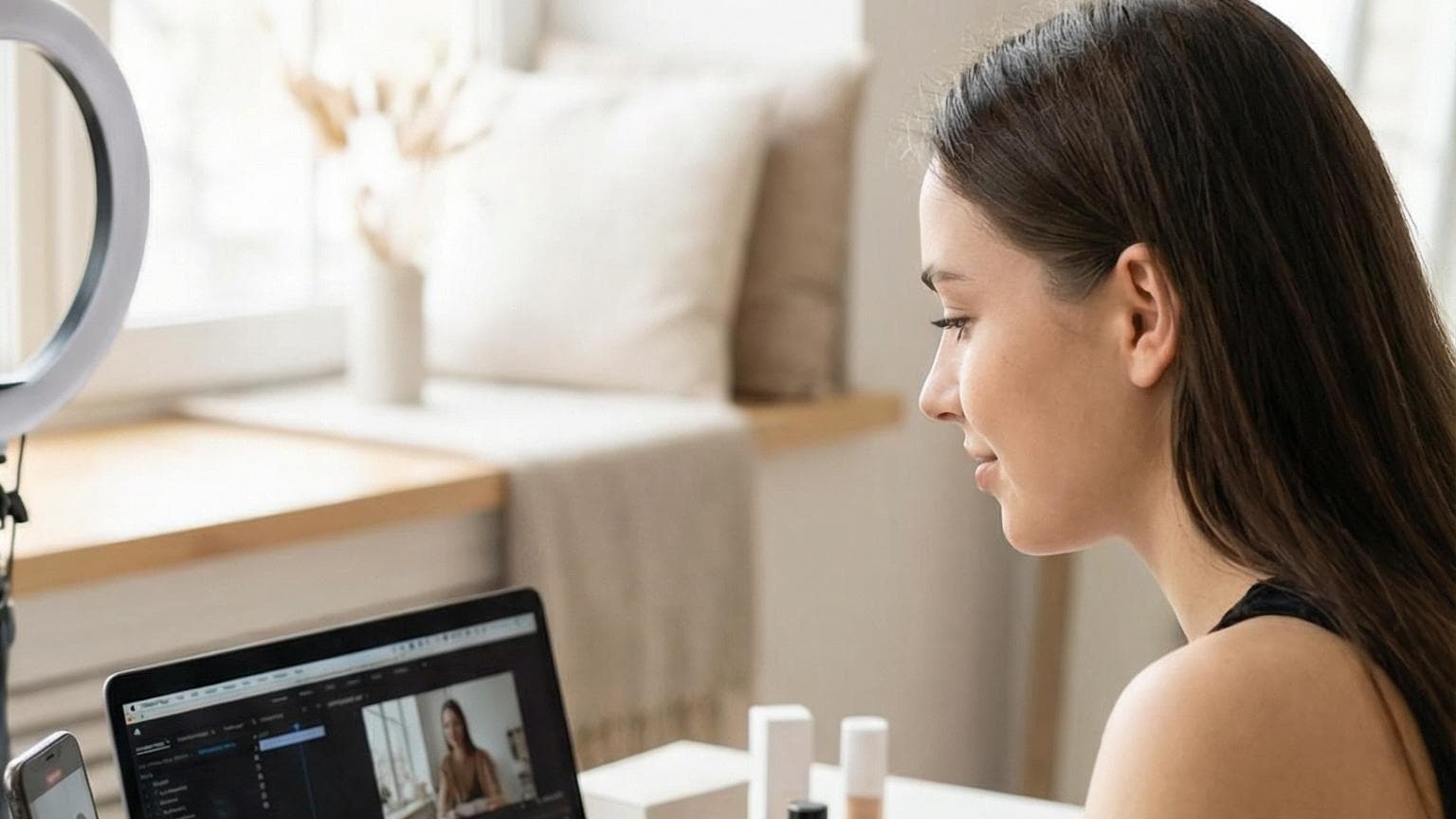
Quick answer: An AI product video generator turns product images and approved claims into short product videos, so one SKU can get the hooks, formats and angles it needs across TikTok Shop, Reels, Amazon and Shopify product pages. The workflow: build a creative input pack per product, generate variations by job (hooks, demos, proof, objections), then map each set to its placement and export in the right aspect ratio.
Short-form commerce is getting more “product page native.”
TikTok Shop is the obvious example: the product page is no longer a static destination. It is a feed, a video module, a carousel of proof, and a conversion surface all at once.
That shift is spreading everywhere:
- Instagram Shopping is pushing shoppable Reels and creator-style product demos
- Amazon is rewarding listings that answer questions fast (especially with video)
- Shopify brands are building PDPs that look more like landing pages, with video above the fold
- Paid social is basically a never-ending audition for your next winning creative
This is not a creative problem.
It is a production problem.
Most teams can make one good video. They cannot make the 50 variations needed to win across TikTok Shop, Reels, Shorts, Amazon PDPs, and ads - every week.
This post is for Shopify merchants, Amazon sellers, D2C operators, and social commerce teams who need an AI video workflow that keeps up with how product pages now work.
Main keyword: AI video generator
Supporting keywords: AI UGC generator, Amazon product video, TikTok Shop product video, shoppable Reels, create video with AI online
Why Are Product Pages Turning Into Video Feeds?
Because buyers do not “read” product pages anymore.
They scan for answers:
- What does it look like on a real person?
- How does it fit?
- What is the texture?
- What is the before/after?
- What do I get in the box?
- Will this solve my specific use case?
Video answers those questions faster than text, and it does it in the same format people already consume all day.
TikTok accelerated this by collapsing discovery and purchase into one flow. If you missed the implications, it is worth revisiting Tellos’ breakdown of the shift: “TikTok just reimagined the product page.”
https://www.jointellos.com/blog/tiktok-just-reimagined-the-product-page
The takeaway is simple:
Your “product page” is now a bundle of micro-videos, not one hero asset.
What Does This Change for Shopify Brands vs Amazon Sellers?
Same problem. Different surfaces.
Shopify (D2C) PDPs
Shopify brands control the page, so the opportunity is bigger:
- Put video above the fold to reduce bounce
- Use variant-specific video (colorways, sizes, bundles)
- Build “proof stacks” (reviews, UGC clips, demos) that match objections
But the operational reality is brutal: every new drop, every restock, every angle needs video.
Amazon PDPs
Amazon is stricter, but the bar is clear:
- Your video has to reduce returns and increase conversion
- Your video has to explain fast, with no fluff
- Your video has to match the search intent (problem-solution, comparison, setup)
Amazon sellers also need more variations than they think:
- One video for the listing
- Multiple videos for Sponsored Brands Video / Sponsored Display placements
- Different hooks for different keywords and audiences
TikTok Shop Product Pages
TikTok Shop is the most “feed-native” product page:
- The best “PDP” is often a rotating set of creator-style clips
- Your winning assets are usually UGC-style, not polished studio ads
- Your product page is constantly competing with the next swipe
Instagram/Facebook Commerce
Meta is still a performance machine, but creative fatigue is real:
- Reels placements need fast hooks and native pacing
- Catalog + video combos win when they feel like content, not ads
- Retargeting needs new angles, not the same edit with new text
Across all of these, the requirement is the same:
You need a system that produces video volume without collapsing your team.
The Real Bottleneck: You Do Not Need “A Video.” You Need a Video Library.
Most operators underestimate how many videos one product actually needs.
A practical baseline for a single SKU that is actively marketed:
- 5 hooks (different first 1-2 seconds)
- 3 formats (9:16, 1:1, 16:9)
- 4 angles (demo, unboxing, comparison, testimonial)
- 3 audiences (new customer, aware, retargeting)
That is 180 combinations before you even get into:
- Seasonal versions
- Price/promo versions
- Creator-style variants
- Different claims (comfort, durability, style, speed, results)
Traditional production cannot keep up. Even strong teams hit the ceiling.
This is where an AI video creator becomes infrastructure: it turns your product data and brand rules into repeatable output.
Not “one perfect video.”
A pipeline.
What Kind of Videos Convert on Feed-Native Product Pages?
If you are trying to win on TikTok Shop, Reels, Amazon, and Shopify PDPs at the same time, you need a mix.
Here are the formats that consistently do the conversion work.
1) The “Proof in 7 Seconds” Clip
Best for: TikTok Shop, Reels ads, PDP above-the-fold
Structure:
- Hook: outcome or problem
- Proof: show the product doing the job
- Close: one clear next step
Examples:
- “My white sneakers used to get ruined in one wear. Now they don’t.”
- “This dress is the only one I can wear without shapewear.”
2) The UGC-Style Testimonial (Without the Influencer Dependency)
Best for: TikTok Shop product pages, Meta retargeting, Shopify PDP proof sections
What matters:
- Specificity beats polish
- Objections beat features
- “I was skeptical because…” beats “This is amazing”
This is where UGC video AI is useful: you can generate creator-style variations without waiting on creators, shipping product, or managing briefs.
3) The “How It Fits” Fashion Loop
Best for: apparel brands on TikTok, Reels, Shopify
Include:
- Front, side, back
- Movement (walk, sit, stretch)
- Fit notes on-screen (height, size worn)
If you sell apparel and you are not producing fit videos at scale, you are leaving conversion rate on the table.
4) The Amazon-First Explainer
Best for: Amazon product video, Amazon ads, also works on Shopify PDP
Amazon buyers want clarity:
- What is included?
- How do I use it?
- What makes it different?
- How do I choose the right option?
Keep it literal. Keep it fast.
5) The Comparison Clip
Best for: paid social, TikTok Shop, Amazon (when allowed), Shopify landing pages
Comparison angles:
- Old way vs new way
- Cheap alternative vs yours
- Competitor vs yours (careful with claims)
This format is a conversion lever because it helps buyers justify the purchase.
How Do You Build an AI Video Workflow That Actually Scales?
AI video only helps if it plugs into how teams work.
Here is a workflow that maps to real operator constraints.
Step 1: Build a “Creative Input Pack” Per Product
You need consistent inputs so output is consistent:
- Product images (clean + lifestyle)
- 5-10 key claims (approved language)
- 10 objections + answers (shipping, sizing, durability, returns)
- Brand tonality rules (what you say, what you never say)
- Offer rules (discount language, compliance)
If you want to tighten this further, Tellos’ post on enforcing voice is a good companion:
“Brand tonality in 2025: define it, enforce it, and lift your Shopify conversion rate.”
https://www.jointellos.com/blog/brand-tonality-in-2025-define-it-enforce-it-and-lift-your-shopify-conversion-rate
Step 2: Generate Variations by “Job,” Not by Platform
Platforms change. Jobs stay stable.
Generate sets like:
- Hook tests (10 variants)
- Objection handlers (10 variants)
- Feature demos (5 variants)
- Social proof (10 variants)
- Offer/promo (5 variants)
Then export into platform specs.
Step 3: Map Each Set to Placements
A simple mapping that works:
- TikTok Shop: hooks + UGC-style proof + fast demos
- Instagram Reels: hooks + aesthetic loops + testimonials
- Amazon PDP: explainer + included-in + "how to choose" clips
- Shopify PDP: fit or demo loop above the fold + UGC-style proof below it
- Paid social retargeting: objection handlers + offer/promo variants
Step 4: Review, Publish and Refresh
Review every video before it goes live: product accuracy, color, claims and on-screen text. Then publish, track which hooks and angles win, and feed the winners back into the next batch. Refresh creative on a schedule, because feed-native placements fatigue fast.
What to Look for in an AI Product Video Generator
- Product accuracy. The product in the video has to match what ships. Color drift or wrong details drive returns.
- Image-to-video from your existing photos. You should not need a new shoot to get video.
- Multi-format output. 9:16, 1:1 and 16:9 from the same source.
- Bulk generation. A library means dozens of videos per SKU, not one.
- Brand controls. Approved claims, tone and visual style applied every time.
For a deeper look at the production side, see our guide to creating product videos without filming. Fashion brands can also start from our free AI fashion video generator.
Frequently Asked Questions
What is an AI product video generator?
An AI product video generator is a tool that creates product videos from existing inputs such as product photos, key claims and brand rules, instead of filming. It generates motion, formats the clip for each platform, and can produce many variations per product.
Can an AI product video generator make videos for Amazon listings?
Yes. Amazon listing video works best as a literal, fast explainer: what is included, how to use it, what makes it different and how to choose the right option. The same product inputs can also produce extra variations for Sponsored Brands Video and Sponsored Display placements.
How many videos does one product need?
More than most teams expect. A practical baseline for an actively marketed SKU is 5 hooks, 3 formats, 4 angles and 3 audiences, which is 180 combinations before seasonal, promo and creator-style versions. That is why a repeatable AI workflow matters more than one perfect video.
Which product video formats convert best on feed-native product pages?
Five formats do most of the work: a proof-in-7-seconds clip, a UGC-style testimonial, a "how it fits" loop for apparel, an Amazon-first explainer, and a comparison clip. Mix them by placement rather than using one video everywhere.
Start Building Your Product Video Library
Tellos AI Video Studio turns your product photos into on-model, platform-ready videos for Shopify, Amazon, TikTok Shop and Reels, so every SKU can launch with a full video library.